Showing posts with label Microsoft. Show all posts

Thursday, September 5, 2013

On that Microsoft-Nokia sale

By now you would have read countless of op-eds about Nokia's sale of their phone division to Microsoft. Suffice to say I have nothing to add, except that I am glad that we will still be getting Nokia phones, one way or another. Sure, phones with Nokia as a brand will go away eventually, but that would happen if Microsoft doesn't buy them anyway. 

In fact, this whole sale reminds me of IBM's sale of their PC division to Lenovo. Many ThinkPad fans, like me, were understandably concerned that Lenovo would not have treated the brand with enough respect. Fortunately that hasn't been the case. Long time ThinkPad designers stayed on, and today Lenovo makes some of the best ThinkPad laptops we have ever seen. The same can happen with Nokia's phone division if handled properly.

It will be a while before we will see the benefits from the sale. But here's hoping that Nokia's phone hardware engineers and Microsoft's software engineers will work closer than ever. Past Lumia hardwares has always been hampered by Microsoft's lack of dedication to the Windows Phone platform, so a hardware division that could exert some influence on Microsoft's software division will do some good.

In any case, this sale will at least gives us hope for a Lumia Surface phone with stonking good camera. 

Friday, July 26, 2013

Halo: Spartan Assault review

When Microsoft Studios first announced Halo: Spartan Assault on Windows Phone 8, I almost reeked with disgust. Here was a franchise which gameplay was deeply rooted as a first shooter genre. I admit that I have a deep seated biased against developers who attempt to shoehorn a gameplay designed for consoles onto smartphones. It would be unplayable.

Thankfully, the developer Vanguard alongside Microsoft Studios seems to have realised that and designed the Halo: Spartan Assault around a smartphone's more limited input options. The result is something beautiful and is easily one of the best tactical based shooter available on any smartphone. This isn't yet another Halo first person shooter. The huge difference in gameplay mechanics, not to mention the platform, Halo: Spartan Assault deserves a proper examination.
In Halo: Spartan Assault, you play a series of missions/campaigns using a UNSC training simulator (yes, it's a game withing a game!) fighting off an invasion of a bunch of Covenant thingies. The biggest change over its console and PC cousins is the change from first person's perspective to overhead camera. While there is no analog pad on Windows Phone to assist in aiming or movement, the game makes do with two virtual twin sticks which while aren't as accurate as a proper analog pad, is serviceable. It is by no means a perfect solution to a long standing problem but until Microsoft adopts a universal gaming pad for Windows Phone 8 platform, this is the best we can do. According to Microsoft, gamepad support is coming to the Windows 8 version.

Tuesday, June 11, 2013

iOS finally goes modern (sort of), Sony wins E3

I haven't blog for a month now, which is pretty long I guess. It's been a busy time in my life, but I am planning to get back to blogging here slowly once again. Let's just say that house hunting in London is a little more overwhelming than we should have allowed it to be. I am pretty sure I aged ten years in these last couple of months.

I just want to put a few thoughts about the latest tech news and what I think about them holy hell, iOS 7 looks a heck a lot like Windows Phone doesn't it? I mean it still features a boring old grid design with static icons and inconsistent UX, but look at that multitasking page and flat(er) UI design! The drop shadows and fake 3Ds and textures mimicking real life products are all gone. It finally looks the bit of a 21st century OS. Barely.
O hai modern UI wannabee
Still, it's shift from skeuomorphism to something a bit more modern is something I can accept - after all I have been calling for Apple to ditch their 20th century design paradigm and follow Microsoft halfheartedly into the brave digital world. Even Palm OS, which you know, powered touchscreen smartphones way back in 2002, featured a slightly skeumorphism-less design and nobody had a problem using it. Depending on how Microsoft responds with Windows Phone Blue and how Apple will design the iPhone 5's successor, I might even consider an iPhone. Maybe...
Argh, colour gradient icons! Ew...
...or maybe not. Sorry Apple, must try harder.

Sony has proven again why it is the top dog when it comes to living room gaming with yesterday's E3 announcement. While Microsoft's Xbox One looks like an admirable effort (hardware wise, used games policy - not so much), Sony's new PS4 strategy has confirmed that I will be sticking with them through the next gen. I am no Sony fanboy but I have stuck with Sony and Nintendo for my living room console gaming. Nintendo appears to have gone wayward a bit, and I can't forgive them for the Wii's dire software library, but I can see a future where their consoles or games are still part of my life.
You hideous thing but I still want you
Back to the PS4. As the PS3 is still going strong, I will likely only enter the next gen gaming a year later, perhaps after the first PS4 price drop. This is a strategy I have been using for every console, and while £350 is a good price, we are in this whole house buying... I am also not too keen on the design of the PS4, but hei, it's a gaming device not a piece of decor. After all, the PS3 wasn't exactly a Red.dot winning product. And gaming is exactly what the PS4 appears to be designed for. Good job Sony. You almost lost it in the early years of the PS3 but you have done well here. Just keep all that 3D bullshit to yourself and we will continue being friends.

Thursday, May 16, 2013

Itsdagram, an Instagram client for Windows Phone 8

Instagram (update: since renamed to Instance) has finally come to Windows Phone! Well sort of. Itsdagram is the first fully featured Instagram client on the Windows Phone Marketplace to allow direct uploading. In fact, it is the first fully featured third party Instagram client on any mobile platform that will allow you to register, upload, like, follow and comment.

This is particularly impressive, when you consider that Instagram has yet to open up their upload API to the public.
For a first version release, Itsdagram is impressively featured. Apart from Instagram's stock filters, it can do everything that an official Instagram client on iOS and Android can do, and more, including features exclusive to Windows Phone. For example, you can pin hashtags and users to the homescreen for easy access, something the official Android app can't do (iOS don't even support widgets).

Monday, February 25, 2013

Defeat Windows Phone 8 'Other' Storage with Shrink Storage app

Windows Phone 8 has a strange storage 'bug' that keeps eating away at your storage space if you are not too careful. Now this happens all the time (it happens on my Android and iPhone as well), but on my HTC Windows Phone 8X, with its limited 16 GB of storage (12 GB after formatting and system allocations) and no ability to expand storage via microSD slot, this can lead to tons of frustration.

A Windows Phone developer once told me that all Windows Phone apps are run sandboxed, meaning if you delete them, everything associated with the app goes. This also means there is no reason for a file explorer or registry so you can go an manually delete any orphan and temporary files. Unfortunately this isn't always exactly true.

It appears that Windows Phone 8 uses a susbtantial amount of storage space which is labelled as 'Other'. And like the misunderstood villains of the first few series of Lost (before the series turned into an orgy for writers to make stuff up as they go along), the 'Other' can turn your Windows Phone 8 stay into a rather unpleasant one.
From what we know, the 'Other' is where temporary storage like web browsing cache, e-mails, text messages, attachments, possibly Facebook galleries/cache, app cache and data, and map data are stored. But this doesn't account for how fast the 'Other' can rapidly expand. On my 8X, 4.02 GB of storage was taken by the 'Other'. This despite only having a handful of sub 20 MB games and only having downloaded the map data of England (around 240 MB).

I have read a couple tales of woes by users who has their 'Other' taking up 10 GB of storage space! There are speculations that SkyDrive cloud storage is also causing 'Other' to bloat. This issue also appears to plague Windows Phone 7 as well, as I remember vividly having to battle to regain storage on my old Lumia 800, where it would occasionally run out of storage but a sync through Zune would then bizarrely free up some storage.

Fortunately an enterprising developer has created an app that forces the 'Other' to flush some of these redundant data and free some storage up for users to claw back. Called Shrink Storage, the app will attempt to free up storage by tricking the phone into believing it is running out of storage - by actually filling up the internal storage with useless data. This forces the OS to release some additional storage allocation from the 'Other', resulting in some gained storage. After using the app for the first time, my 'Other' shrank to 2.87 GB, freeing an additional 1.15 GB for me to use, so yay, it works!
Now, it's fair to say that Microsoft has engineered Windows Phone 8 to use those other empty storage space to speed up operations by caching stuff. After all what is the point of ignoring a perfectly good empty storage? It's a valid point, but I disagree. Some users (like me) allocate some storage for later use, so we don't appreciate when an app or OS would reserve them. I can remember several occasions where I was recording HD videos of live shows, only for the phone to rudely interrupt the recording because the storage filled up quickly. Because of the 'Other'.

All this would be moot if Microsoft would mandate a minimum amount of storage that OEMs must ship their phones at. Surely in 2013, 32 GB should be bare minimum for a phone that comes equipped with a camera capable of recording 1080p video files. Expansion slots should also be encouraged. After all, what is the point of crafting a multimedia phone when I can't even use it? It is in Microsoft's best interest to ensure a good user experience. At the very least give us a way to control how much space is reserved for 'Other'.

Until then, if you are a Windows Phone 8 user needing free up some storage and defeat the bastardly and evil 'Other', Shrink Storage will do you good.

Wednesday, February 20, 2013

Windows Phone 8 and what needs fixing

I have been using Windows Phone 8 for a solid two months now, first with the Nokia Lumia 920 and then the HTC Windows Phone 8X. And just like it was a year ago with Windows Phone 7.5, and the year before that with the original Windows Phone 7, I am in love with this OS. The beautiful Swiss-style Metro UI is just perfect for my mobile needs. It's so intuitive even a bloody cat can operate it. I can't go back to using an Android or iOS device without muttering, bloody Xerox grids. Go back to the 1980s where you belong.

But as before, Windows Phone's great UI and UX aren't enough. There is so much to Windows Phone 8 that doesn't deserve Microsoft's inaction. I understand they had to get Windows 8 launch out of the way, but their strategy with Windows Phone is now making less sense than ever. They stumbled upon such a beautiful UI that they even made their core OS and Office products out of it, so the first product line to ever use it (Zune doesn't count) should deserve more than being just existing as a beautiful empty vessel.

The thing that Windows Phone does best (apart from featuring a modern design), is integration. Facebook is already so well integrated with Windows Phone 7/8, I hardly if ever, use the official Facebook app or their mobile site - in fact I call Windows Phone the real Facebook phone (sorry HTC ChaCha). I would like to see Microsoft take this integration to social network further - first by introducing more Twitter features into the People Hub and second by integrating other social networks such as Foursquare. If it weren't for the lack of Direct Messages and Reply-to-All feature on the People Hub, I wouldn't be using a third party Twitter client.

Saturday, February 16, 2013

Design Museum: Designs of the Year 2013 nominations

London-based Design Museum has announced the nominations for this year's The Designs of the Year awards. The award will showcase innovative designs spanning across seven categories: graphics, transport, product, fashion, digital, furniture and architecture.

Among those nominated., these includes the A Room for London, a pop up hotel currently sitting on top of the Queen Elizabeth Hall building at the Southbank Centre; The Shard, Europe's newest tallest building build in the London Bridge district and Kapow!, the book set about in the Arab Spring.

From a digital/mobile technology perspective (only because I blog a lot about phones), Windows Phone 8, the Swiss style inspired mobile OS reboot by Microsoft - which I recently reviewed with the HTC Windows Phone 8X and Nokia Lumia 920, was also nominated.

Wednesday, February 6, 2013

Snes8x Super Nintendo emulator for Windows Phone review

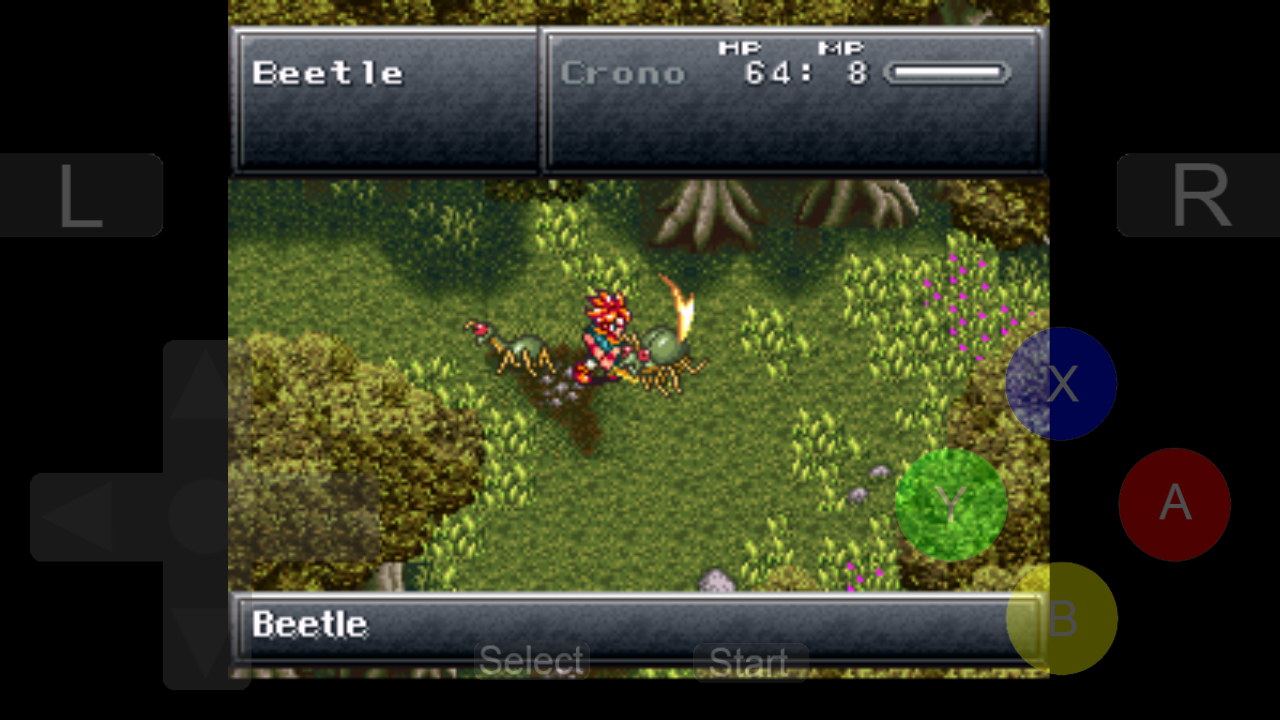
Windows Phone platform has a surprising number of working emulators. The first released was vNES, an emulator for the Nintendo Entertainment System also known as the Famicom in Japan, a relatively old console and hence easy to emulate. There are also emulators for the Sega MasterSystem, Sega GameGear and Nintendo Game Boy Color. For a walled garden platform, Microsoft has been surprisingly lenient when it comes to allowing such apps on their Marketplace. Perhaps this is Microsoft's way of compensating and apologising for the severe lack of Windows Phone Xbox Live games...
Chrono Trigger, still one of the best Japanese RPGs
One of the newer and perhaps more impressive emulator on the platform is Snes8x, an emulator for old time gamers who wishes to relive their favourite childhood SNES games, many of which rivals even modern gaming. What is a SNES? Well any self respecting gamer will know about the SNES, Nintendo's second home console. The Super Nintendo is known to have created a whole new generation of gamers - in fact its influence can be felt up to now. Many of today's famous franchises such as The Legend of Zelda, Metroid, Final Fantasy and Street Fighter flourished on it. It isn't a surprise that the SNES became the dominant 16-bit home console to own in the early to mid 1990s.
RPGs like Final Fantasy VI plays well on a touchscreen display
Snes8x code is based on Snes9x, a popular free SNES emulator that works on a variety of platforms including Android and Windows. For a freeware app, Snes8x features a high list of features including options of import and export both game and save states via SkyDrive and portrait/landscape mode. The app also supports full screen mode, but this stretches the game to fill the display, ruining the aspect ratio. ROMs have to be uploaded to a SkyDrive account, of which every Windows Phone users will have one anyway, before being downloaded via the Snes8x import utility app. Update: with the latest version, Snes8x now allows you to import ROM files via e-mail attachments or direct download from a webpage - awesome! It's a painless process. Individual games can even be pinned onto the start screen.

Wednesday, September 19, 2012

HTC announces new 8S and 8X Windows Phone 8 smartphones

HTC today announced their range of upcoming Windows Phone 8 powered smartphones, the HTC 8S and 8X. Of the two, the 8X is the more exciting one. Both phones will be available in a range of colours.

The HTC 8X appears to have all the right boxes ticked. It has a 4.3" Super LCD 2 display with 720x1280 resolution. If the display is based on the same technology used on the One X, then it will surely be one of the best out there. Powering the phone is a Qualcomm Snapdragon S4 chipset with a pair of 1.5 GHz Krait CPU and Adreno 225 GPU, plus 1GB RAM, which is a fair upgrade over their last Windows Phone flagship, the HTC Titan 2.

HTC has equipped the 8X with what appears to be the same camera module as the One X - a 8MP backside illuminated sensor along with a 28mm wide angle lens with f/2.0 aperture (35mm equivalent) and a proprietary HTC ImageChip for quicker shooting. Again, if this is anything like the One X, the camera here will be a joy to use. The front facing camera is said to contain a 2.1MP camera with a wide angle lens, and will make use of the ImageChip. Both cameras can record videos in 1080p resolution.

Wednesday, September 5, 2012

Nokia announces new Lumia 820 and 920 Windows Phone 8 smartphones

Nokia today announced its latest flagship, the Windows Phone 8 powered Lumia 920 and mid-range Lumia 820 at an event in New York City.

The Lumia 920 retains the same gorgeous design language as the Lumia 800 and Lumia 900 but will come with a larger 4.5" display. The 768x1280 resolution LCD IPS display will feature Nokia's proprietary ClearBlack filter (which they dub as PureMotionHD+ - whatever) said to be able to improve outdoor legibility. Like the Lumia 800, the Lumia 920's screen will sit below a curved glass. If it is anything like the IPS display seen on the HTC One X or iPhone 4S, then you won't miss AMOLED one bit.

Powering the Lumia 920 will be Qualcomm's successful Snapdragon S4 SoC featuring a pair of 1.5GHz Krait CPUs and Adreno 225 GPU, a clear boost over the Snapdragon S2 SoC that powered the Lumia 800 and 900. 1GB RAM and 32GB of internal storage are included. Disappointingly Nokia has decided not to engineer a memory expansion slot onto the Lumia 920 despite Windows Phone 8 supporting such expansion. Oddly enough, it's lower end cousin the Lumia 820 (see below), also announced today, will feature a microSD expansion slot.

Its 8.7 megapixel PureView branded camera may disappoint pixel peepers with no photography skills, but in reality is likely to be more than enough. Nokia has made bold claims about how amazing this camera will be but they have made similar hyperbolic claims with the Lumia 800 as well, and we all know how that turned out. Still, it does look like we will see some improvements, including the introduction of a new kind of image optical stabilisation with the camera technology used here as well as the software algorithm needed to capture steady images in low light.

Friday, June 22, 2012

The Android'isation of the Windows Phone 8 start screen

Now that the dusts has settled and I have had a chance to study closely the screenshots of the new Windows Phone 8, it has finally come to my attention how much Microsoft has compromised with Windows Phone 8 in their chase for bigger marketshare.

I present to you the new start screen that will soon grace your Windows Phone devices:
Cluttered. Generic. Ugly
That's some ugly mess up there, don't you agree?

The move towards a symmetrical design and introduction of tiny live tiles has resulted in Windows Phone 8 now looking like a cluttered mess resembling the typical grid layout employed by many bog standard mobile OSes, just with live tiles instead of icons. Where is the neutral space? It actually looks like a poor imitation, a third party launcher made by a third party developer who was attempting to mimic the original Windows Phone 7 homescreen, but has somehow forgotten the core Metro principal that made Windows Phone 7 so aesthetically pleasing, elegant and classy to see and use.

I appreciate the ability to resize tiles (it's an option after all, one that I would choose not to use). But to those who weren't planning on resizing tiles (like me), well the new symmetrical home screen will actually shows less medium size tiles compared to Windows Phone 7 (six versus eight). Think about that. The whole point about the original Windows Phone homescreen and live tiles was about information at a glance. Now tell me how you can glance at that cluttered mess up there with all those stupid tiny tiles? It is amazing how, with one fell swoop, Microsoft has managed to turn Windows Phone from a beautiful OS to an ugly one. I know small tiles will be optional, but it won't be for us who wanted eight medium tiles to show at any one time.
Information at a glance
As someone who has long championed the unique interface of Windows Phone 7, I am more disappointed than angry with the decision makers at Microsoft Windows Phone division, who has caved in and allowed one of the most beautiful asset and aspect of Windows Phone Metro user interface to be lobotomised and ravaged. Have the designers at Microsoft's Windows Phone division not have the will to follow through what they once believed in?

You know, I can deal with old devices being left behind. It is the violation of Metro UI that I can't stand. Microsoft has made a big deal about core aesthetic values of Metro UI, and and how important the whole 'less is more' concept is. It seems that with Windows Phone 8, Microsoft developers and designers are stamping on that very belief and philosophy. In fact, the one thing that scares me more about the future of Windows Phone, is that if something as sacred as the Windows Phone 7 start screen is considered expendable by their creators, so are the rest of Metro! I can already see the reintroduction of scroll bars and even Apple'esque skins (oh, the horrors!) in future iterations.

I hope the people who has whinged about the start screen on Windows Phone 7 are happy. You have just made Windows Phone 8 look like yet another generic, ugly and cluttered mobile OS. Urgh. I live in hope that the final version of Windows Phone 8 will have options to revert to the old style asymmetrical off-center start screen - I really want that negative space back dammit!

When will you stop breaking my heart, Microsoft?

Wednesday, June 20, 2012

Windows Phone 8 announced

Microsoft today detailed the next version of Windows Phone Apollo, Windows Phone 8. No doubt the information passed down by Redmond today will have to be digested first, but it seems to have gone down well by my Twitter followers.

First up, the new Windows Phone 8 will run on the same shared Windows NT kernel and C and C++ libraries that will power Windows 8 and Windows RT. How exciting is that? Microsoft has effectively announced the first single platform running from desktop, tablets, laptops and smartphones. This means developers can easily reuse code to deploy their apps on all Windows 8 and Windows Phone 8 platform. It also means better display support (Windows Phone 8 will support 480x800, 720x1280 and 768x1280 resolution) as well as multi-core processor support.

As Windows Phone 8 will have support for native DirectX 11 code, game devs can now release the same games on Windows 8 desktop, tablets and Windows Phone 8 smartphones. Windows Phone 7 runs better on a single core processor than an Android device with quad core processor, so it is certainly exciting to see multi-core processors supported with Windows Phone 8. Other changes includes the much requested expansion storage support, NFC payment and customisation. Yes, Windows Phone 8 will include a new homescreen with resizeable live tiles. I am not entirely too convinced by this as Windows Phone 7 has always been about offering UI consistency. Still, it is entirely optional and will at least appease those who has complained that live tiles are 'too large'.

Microsoft will also be deploying Nokia's mapping technology - effectively giving Nokia another cash flow in terms of licensing fees. A win-win for Nokia and Microsoft. In addition to that, Microsoft has also demo'ed the new Internet Explorer 10 with improved JavaScript and HTML5 performance. Skype and other third party VoIP will also be integrated into Windows Phone 8. Windows Phone 7 apps will also be recompiled by Microsoft to ensure they work on Windows Phone 8. Microsoft has also detailed background tasks and introduced 'real multitasking'. Finally, OTA updates will be delivered to the devices with updates promised for at least 18 months.

Now some bad news for current Windows Phone 7 owners, there will be no upgrade path for us lot. Current devices like the Nokia Lumia 800 will receive Windows Phone 7.8 update, bringing UI enhancement but you won't be getting anything like the new Windows NT kernel. It is certainly disappointing to see older devices get the cull, but it is probably necessary due to technology limitations. Other than that, Microsoft has reassured that Windows Phone 7.8 will feel and look just like Windows Phone 8.

Microsoft has slapped Google down this week, first with Surface and now Windows Phone 8. It is an exciting time to be a mobile technology fan, after years of putting up with sub-par UI. Don't get me wrong - Android is sleek, but the UI in both ICS and Honeycomb, are just a bloody mess. If executed properly, Microsoft will not only bring a mobile OS with brilliant UI and UX, but also the power and feature parity that mobile geeks craved. If this will give Google a kick in the arse to pay attention to the actual user interface of their Android platform, then better still. At the end of the day, us consumers will win.

Update: It appears that Microsoft has caved in and screwed up with the design of Windows Phone 8.

Tuesday, June 19, 2012

Microsoft announced Windows 8 Surface tablet, shows OEM partners how it is done

Microsoft today announced a range of Surface tablets running on the upcoming Windows 8 operating system. No doubt some of you have read about it as it has been covered by every news site and blogs (sorry). There will be two version of Microsoft Surface tablets, one that runs on ARM processor and Windows 8 RT (Runtime), and the other an Intel-powered Windows 8 Pro tablet.

The Windows 8 RT Surface tablet will be powered by an NVIDIA Tegra-based ARM chipset. It will be available with either 32 or 64GB capacity and comes with a 10.6" HD touch panel. Microsoft has not announced pricing or availability other than it will be priced similarly to other comparable Windows 8 RT tablets at launch, sometime in September or October of this year.

The more exciting of the two Surface tablets is the (likely to be more) expensive Windows 8 Pro tablet. Again, no pricing has been announced but it is fair to say that it will be priced similarly to an Ultrabook/Macbook Air laptop. Considering it is essentially an Ultrabook convertible tablet, I expect it to be so. Unlike the Surface RT, the Surface Pro will be powered by an all dancing, all singing Intel Ivy Bridge Core i5 processor, with capacities ranging from 64 to 128GB.
It will weigh 903 grams, hefty compared to ARM-based tablets like the iPad and Windows 8 RT Surface, but also light when you compare to Ultrabooks or other x86 tablets like the ThinkPad X220. The 10.6" display is full HD, meaning it has a resolution of 1080p, and will be protected by GorillaGlass 2. It will be available three months after Windows 8 is launched, so expect it around January or February of 2013. Both devices will come with built-in stand. A detachable cover with built in multi-touch keyboard will also be made available.

With the specs and facts out of the way, it is time for some wild speculations. I am going assume that the Surface RT tablet will be powered by either a Tegra 3 4-PLUS-1 SoC or newer next generation Cortex A15-based Tegra. I certainly hope it would be the latter or will be slightly disappointed that Microsoft has not gone for the more modern Qualcomm's Krait-powered Snapdragon S4 rather than the now architecturally outdated Tegra 3.

Price wise, I expect the Windows 8 RT tablet to start from £399 and the Windows 8 Pro slate to start from £699. This is effectively what I would be willing to pay personally for the base model of a tablet with similar specs, and is in line with my expectations on how each should be priced - depending on the built quality of course. Incidentally, a Macbook Air 11 with an Ivy Bridge Core i5 processor and 64GB storage costs £849.
I suspect Microsoft has decided not to release a detailed spec sheet as well as pricing information as Autumn 2012 is still a long way away and anything can happen between now and then (it's an eternity in tech). I still live in hope that Microsoft will change the aspect ratio from 16:9 to 16:10 or even better, 4:3. It seems that only Apple and HP gets that 4:3 is the perfect aspect ratio for tablets. Still this is likely to be wishful thinking.

As for accusations that Microsoft has essentially sidelined their OEM partners, well tough luck. Hardware partners haven't been exactly doing their bit what with undesirable Windows Phone 7 smarpthones (bar the Nokia Lumia 800 and certain HTC devices) and Windows 7 notebooks. Hopefully this will inspire OEMs to develop something a bit more compelling than the me-too products they have been dumping on the Android market. I am still waiting for Lenovo to announce a Windows 8 ThinkPad tablet product, and if this will spur them to make a better product then so be it.

I am personally very optimistic and excited by Windows 8. Microsoft's foray into dedicated tablet hardware is well overdue. With a design that not only looks original and exciting, all I can say is finally some exciting alternatives to some pretty mediocre Android tablets. It is about time a manufacturer steps up and be willing to offer a decent alternative to the mighty iPad.

As the poster boys for Windows 8, I hope Microsoft doesn't deliberately cheapen the Surface tablets in order to get them on the market for cheap. They are OEMs whose business model revolves around just that. Microsoft would do well to set an example to OEMs via premium quality tablets aimed at promoting Redmond's swinging new OS to first adopters. Bring on Fall 2012!

Thursday, June 14, 2012

Nokia Lumia 610 review

I will get right to the point. The Lumia 610 is Nokia's biggest mistake when it comes to their Windows Phone 7 portfolio. Their strategy of racing to the bottom has backfired badly. Core Windows Phone 7 features like Live Tiles has been disabled no thanks to the compromise made with the RAM. While built-in apps has not suffered much, third party apps suffers from incompatibility issues, as well as inability to update its content in the background and update their Live Tiles.

It is difficult to comprehend why Nokia and/or Microsoft chose this route for Windows Phone when the OS philosophy has always been about standardisation, none-compromises and fending of potential fragmentation. I admire Nokia's strategy of getting the price of Windows Phone devices lower, but not when it alters the usability of Windows Phone.

At the end of the day, all I can say is the Lumia 610 and Windows Phone Tango should be treated as none-canon to the Windows Phone family and should thus be ignored and forgotten forever.

Read on my review on FoneArena to see why exactly I found the Lumia 610 to be a failure.

Friday, May 25, 2012

Details from Nokia Summer Media Summit

Yesterday I attended a media summit hosted by Nokia at The Trafalgar in London. As you know, Nokia is currently undergoing one of its biggest challenge in the mobile industry. They have recently lost the title of world largest mobile phone vendor to Samsung, and has even seen their market cap fallen below that of HTC. Many arm chair analysts has already written off the beleaguered Finnish company.

Nokia's issues aren't confined to analysts, but more importantly with customers, the media and retailers, and also internal staff. So how is Nokia attempting to win the hearts and minds of potential customers? They outlined a few commitments. On the media front, Nokia UK will be moving to a new HQ in London so that they will be 'closer to us', as they so aptly put it. They have trained most of their staff for the Lumia to gauge their advocacy.

Saturday, May 19, 2012

Microsoft details Windows 8 desktop mode

In what can be only be described as a ridiculously long blog post Microsoft has detailed the desktop mode of Windows 8 and how it will differ from the glossy effect-driven Aero-look as seen on Windows 7. With Windows 8 set to a tablet-driven interface, there has been concerns raised that Microsoft would do away with the desktop mode altogether. After all, while Metro is pretty - it isn't exactly the most intuitive UI for keyboard + mouse PCs. Due to the need to maintain usability on desktop, the need for a classic mode was always going to be important.

But the move to flat, minimalist Metro UI would mean that switching between the two modes would be jarring. Microsoft has addressed this by Metro-fying the desktop mode. The much disliked Aero Orb Start button is now gone replaced by the Metro start interface. I am also glad to see all the gloss, fake 3D effects, and unneeded effects gone. Shadows and transparency effect (which any sensible person would have turned off on older version of Windows anyway) has also been consigned to history, and the use of gradients has been scaled back, reaffirming Microsoft's new design commitment to simplifying the UI and removing unnecessary effects. Even rounded corners weren't safe from the cutting floor.

Tuesday, May 15, 2012

Rant: Windows Phone Marketplace Search

Readers of this blog will no doubt know that I am a huge fan of Windows Phone. But there are some pet hates I have with this platform, and one of them is an issue big enough that a blog about has long been way overdue. It is a first world problem, but it is an important one as far as mobile OS goes.

Dear Microsoft, the Marketplace search feature sucks. My beef isn't with the Marketplace itself, nor is it with the quality or number of apps (which I have no issue with - 80k and counting apps is good enough) found there. It is the search algorithm, or more to say, the number of developers who are gaming the keyword/search feature on the Marketplace. Basically, Microsoft you are not doing a good job with policing the Marketplace!

I will give you a great example of how the search feature on the Marketplace is an awful experience for the user. In this example, I will be using Twitter as it seems that there is a huge market in WP7 for a fully functional Twitter client. What would a normal user do when searching for a Twitter client? Well they would type 'Twitter' in the search field and then press enter. After all that makes sense doesn't it? Go ahead, do it now and have a look at what sort of rubbish the Marketplace throws up when you search 'Twitter'. Don't have a WP7 device? Well check out the results of the UK Marketplace below:

Thursday, April 26, 2012

Metro and the future of mobile UI

Having grown up with computers for most of my life and witnessing the growing evolution of desktops and then mobile devices, I notice that there is an overemphasis on the details. I don't mean little details like functionality and design language, but on aesthetic of icons and applications. People seem to genuinely believe that a better looking icon meant that their gadgets were quicker and better. Thing is, a detailed icon does not make Photoshop better, nor does it make a browser render quicker. Similarly, having a flip animation doesn't make a book better either.

It is a problem that other industry has eventually grown out of, but the reverse trend is only currently making head ways in the consumer electronics industry. Apple knew that, which was why their iPods were so popular. The black and white text based UI was simple to use and navigate. Competitors like Creative and Archos countered by creating devices featuring colourful but complicated UI, and failed for good reasons. With the iPhone, Apple ditched that core UI philosophy but they got away with it, because their competitors at Nokia, Microsoft and Google did things far worst. While iOS was revolutionary in 2007, it is starting to look extremely dated now.

Thursday, April 12, 2012

Nokia's Big Mistakes

Nokia is in trouble, so the media has been telling us. Well, we all know that. In fact many of us knew that things will only get much worse before it gets better. Cue shock faces.

Nokia is in trouble because they failed to adapt and continued to make mistakes. They believe they were a software company when they were only ever good as a hardware one. People bought Nokia phones because of the great design, not the silly OS it runs on. But behind the large pile of money and rose-tinted glasses, Nokia failed to see that and that is why they are in this pickle. Mistakes were made by all, from the old deposed regime to the new, from the management down to the grass roots.

Saturday, March 10, 2012

How Microsoft won me back

The i-mate JAM is my first true smartphone. Announced in 2004, the i-mate JAM was a highly anticipated mobile device being the first Windows Mobile smartphone that comes in a portable package. Also known as the HTC Magician, the i-mate JAM was a beauty. I remember paying £400 to Expansys to ensure I got it on day one and boy was worth it.

As it runs on a modified version of Pocket PC, the compact i-mate JAM was a familiar device to use. I've already owned quite a few none-cellular Pocket PC devices. With a 2.8" (problematic) touchscreen LCD display with 240x320 resolution, an Intel XScale PXA272 processor clocked at a screaming 416 MHz (overclockable to 520 MHz!), 64MB RAM and 1.3MP back camera. It was cutting edge hardware. Best thing about it? It ran on a Windows Mobile 2003 SE for Pocket PC, the mobile OS you want if you were a self respecting smartphone geek in 2004.
My then awesome i-mate JAM next to my still awesome Palm Tungsten T3